News & PR
NCR’s New Minimum Wage Order: From Wage Compliance to Connected HR
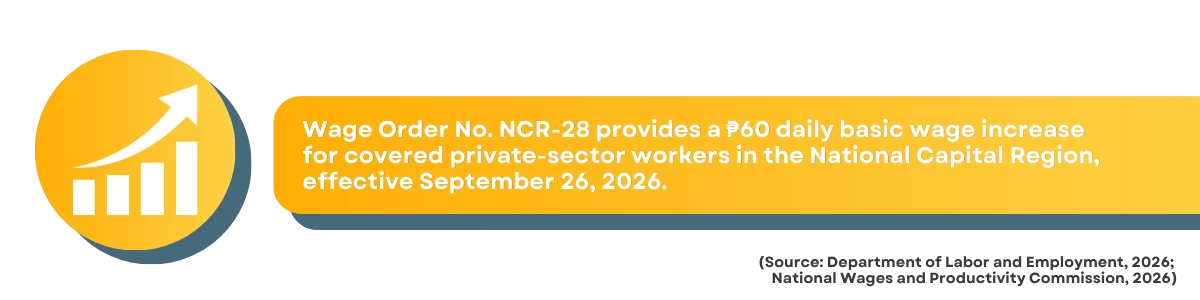
The Department of Labor and Employment (DOLE) has implemented a new wage order for workers in the National Capital Region (NCR), providing a ₱60 daily wage increase effective September 26, 2026. Under Wage Order No. NCR-28, the minimum wage for non-agricultural workers increased from ₱695 to ₱755 per day, while agricultural workers and employees in covered small service, retail, and manufacturing establishments now have a minimum wage of ₱718 per day. (Department of Labor and Employment [DOLE], 2026; National Wages and Productivity Commission [NWPC], 2026)
For employers, the adjustment involves more than changing a payroll figure. Businesses need to review employee classifications, compensation records, attendance data, and related HR processes to ensure the new rates are properly implemented and documented.
Key Takeaways
-
Wage Order No. NCR-28 took effect on September 26, 2026.
-
Non-agricultural workers in covered establishments now have a minimum wage of ₱755 per day.
-
Covered agricultural, service, retail, and manufacturing workers now have a minimum wage of ₱718 per day.
-
Employers should review employee classifications, compensation records, attendance, and payroll-related processes.
-
NCR-27 remains subject to continuing litigation, making current DOLE and NWPC guidance important for employers.
-
A cloud-based HR platform can help centralize workforce information and support HR teams when implementing changes across employee records and timekeeping.
What Is Wage Order No. NCR-28?
Wage Order No. NCR-28 grants a ₱60 daily basic wage increase to covered private-sector workers in the NCR. According to the NWPC, the current rates are:
The order covers the cities of Caloocan, Las Piñas, Makati, Malabon, Mandaluyong, Manila, Marikina, Muntinlupa, Navotas, Parañaque, Pasay, Pasig, Quezon City, San Juan, Taguig, and Valenzuela, as well as the Municipality of Pateros. (NWPC, 2026)
For organizations managing multiple employee classifications or locations, a wage adjustment can affect more than one HR record. Employee information, attendance data, compensation records, and other workforce information may need to be reviewed together.
How NCR-27 Relates to the New Wage Order
NCR-28 comes amid continuing legal issues surrounding the earlier Wage Order No. NCR-27.
The NWPC currently states that implementation of NCR-27 is subject to continuing litigation pending before RTC Pasig Branch 152 and RTC Navotas Branch 287. The published NCR-27 schedule provides a ₱60 first tranche and a subsequent ₱25 increase. (NWPC, 2026)
DOLE's September 2026 announcement states that NCR-28 provides the ₱60 increase based on the NCR-26 wage rates. This makes it important for employers to monitor the latest official DOLE and NWPC guidance when determining applicable wage requirements. (DOLE, 2026)
For HR teams, this also highlights a broader operational requirement: workforce systems need to accommodate regulatory changes without requiring organizations to rebuild employee records and processes from scratch.
What Employers Should Do Now
Following the effectivity of NCR-28, employers can use the following checklist to review implementation:
1. Confirm covered employees.
Review employee classifications and determine which wage category applies to each covered worker.
2. Update applicable wage rates.
Ensure the new minimum rates are reflected in the appropriate compensation records and payroll-related processes.
3. Review attendance and timekeeping data.
Check attendance records, schedules, leave information, and other timekeeping data relevant to compensation.
4. Verify employee records.
Make sure employee classifications, employment information, and compensation records are accurate and consistent across HR systems.
5. Review payroll calculations and payslips.
Verify that the applicable wage rates are reflected correctly in the relevant payroll process.
6. Monitor official updates.
Because NCR-27 remains subject to litigation, HR teams should continue checking official DOLE and NWPC announcements for changes that may affect implementation.
This checklist illustrates why wage compliance is not isolated from other HR functions. A change to basic wages can require HR teams to review information distributed across employee records, timekeeping systems, and compensation processes.
Why Connected HR Systems Matter
Wage compliance is only one part of managing employees. Recruitment, onboarding, attendance, performance, and employee records all contribute to the broader employee lifecycle.
A workforce management software solution can help organizations organize schedules, attendance, leave, and related workforce information in one environment. For growing businesses, this can reduce the need to manually transfer information between disconnected systems.
Recruitment can also be managed within the same HR ecosystem. An applicant tracking system can organize candidate information, applications, screening, and hiring workflows. Similarly, ATS software can help recruitment teams maintain a structured candidate database and manage applicants throughout the hiring process.
After employees join the organization, a performance management system can help HR teams and managers organize goals, evaluations, KPIs, feedback, and employee development.
Together, these functions create a more connected view of the employee lifecycle. This becomes particularly useful when organizations need to roll out changes that affect multiple workforce records at the same time.
Managing Attendance During Workplace Disruptions
Attendance management is also relevant to Philippine employers because workforce operations can be affected by weather and other workplace disruptions.
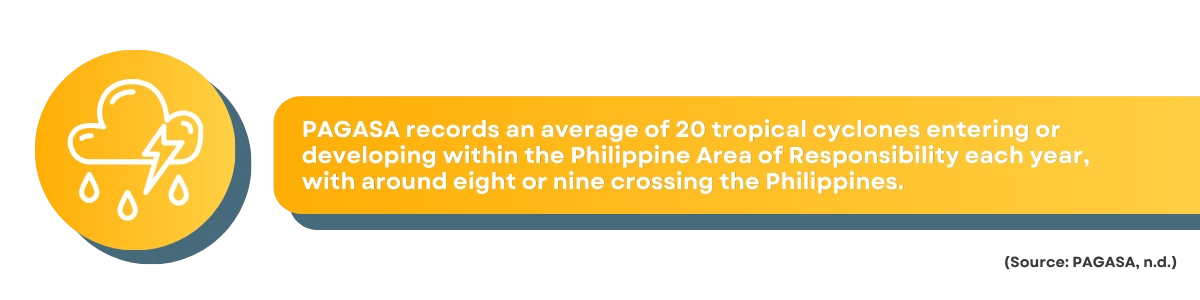
According to PAGASA, an average of 20 tropical cyclones enter or develop within the Philippine Area of Responsibility each year, with around eight or nine crossing the Philippines. The agency identifies July to October as the peak of the typhoon season, when nearly 70% of all typhoons develop. (Philippine Atmospheric, Geophysical and Astronomical Services Administration [PAGASA], n.d.)
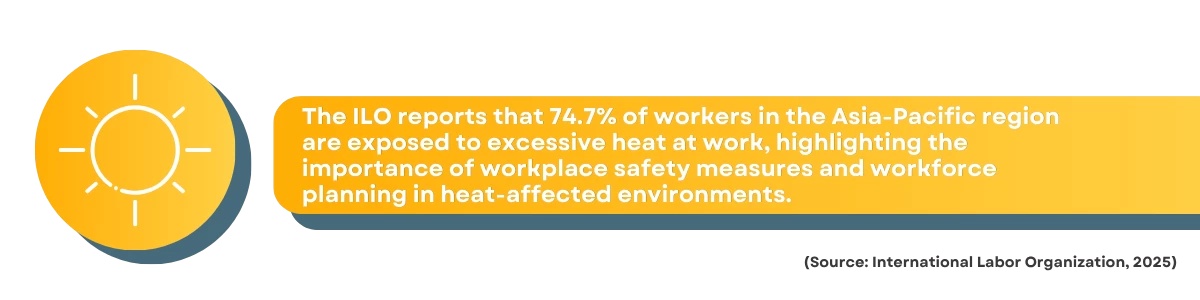
Workplace conditions can also be affected by excessive heat. The International Labour Organization (ILO) has highlighted the risks of excessive heat to workers in the Philippines, emphasizing anticipatory action, occupational safety and health measures, and social protection. The ILO also reports that 74.7% of workers in Asia and the Pacific are exposed to excessive heat at work. (International Labour Organization [ILO], 2025)
For HR teams, reliable digital attendance records can support the management of schedules, approved leave, remote work arrangements, and other workforce changes when normal workplace operations are disrupted.
A cloud-based HR platform can provide authorized HR users with a centralized way to manage relevant workforce and attendance information.
Where BeeConnected Fits In
For businesses looking to connect these HR functions, BeeConnected provides an integrated workplace management platform that brings together employee information, timekeeping, recruitment, performance, and other HR processes.
This approach can help organizations move away from fragmented spreadsheets and separate HR systems toward a more centralized workforce environment.
For example, employee information and timekeeping data can be managed within a connected HR environment, giving HR teams a more organized source of workforce information when implementing operational changes.
For businesses researching HRIS software in the Philippines, the value of an integrated platform goes beyond simply storing employee records. A human resource information system in the Philippines can help organizations connect employee information with processes such as recruitment, timekeeping, workforce management, and performance.
Data privacy should also remain part of the evaluation. Under the Data Privacy Act of 2012, personal information processing must follow principles including transparency, legitimate purpose, and proportionality. Organizations are also expected to implement reasonable and appropriate organizational, physical, and technical security measures for protecting personal data. (National Privacy Commission [NPC], 2016; Republic Act No. 10173, 2012)
From Wage Compliance to Connected HR
NCR-28 demonstrates how a single regulatory change can touch several areas of HR operations.
For employers, the process begins with identifying covered employees and applying the correct wage rate. From there, HR teams may need to review employee records, classifications, attendance information, and compensation-related data.
This makes connected HR infrastructure increasingly relevant. Instead of managing wage-related information, attendance, recruitment, and performance through disconnected spreadsheets and systems, organizations can use an integrated cloud-based HR platform to organize these functions within one environment.
For businesses looking to modernize their HR operations, the goal is not simply to respond to the latest wage order. It is to build an HR infrastructure that can adapt when workforce requirements, regulations, and business processes change.
Ready to move beyond fragmented HR processes? Bring employee management, timekeeping, recruitment, performance, and other workforce functions together with BeeConnected.
References
Department of Labor and Employment. (2026, September 11). DOLE issues new NCR wage order. https://dole.gov.ph/news/dole-issues-new-ncr-wage-order/
International Labour Organization. (2025, March 11). Protect workers, farmers from excessive heat. https://www.ilo.org/resource/article/protect-workers-farmers-excessive-heat
National Privacy Commission. (2016). Implementing rules and regulations of Republic Act No. 10173, otherwise known as the Data Privacy Act of 2012. https://privacy.gov.ph/implementing-rules-regulations-data-privacy-act-2012/
National Wages and Productivity Commission. (2026). National Capital Region: Current daily minimum wage rates. https://nwpc.dole.gov.ph/ncr/
Philippine Atmospheric, Geophysical and Astronomical Services Administration. (n.d.). Tropical cyclone information. https://bagong.pagasa.dost.gov.ph/climate/tropical-cyclone-information?
Republic Act No. 10173. (2012). Data Privacy Act of 2012. https://lawphil.net/statutes/repacts/ra2012/ra_10173_2012.html